The increasing demand for inexpensive, convenient, and environmentally friendly transportation has presented new business opportunities in the mobility sector.
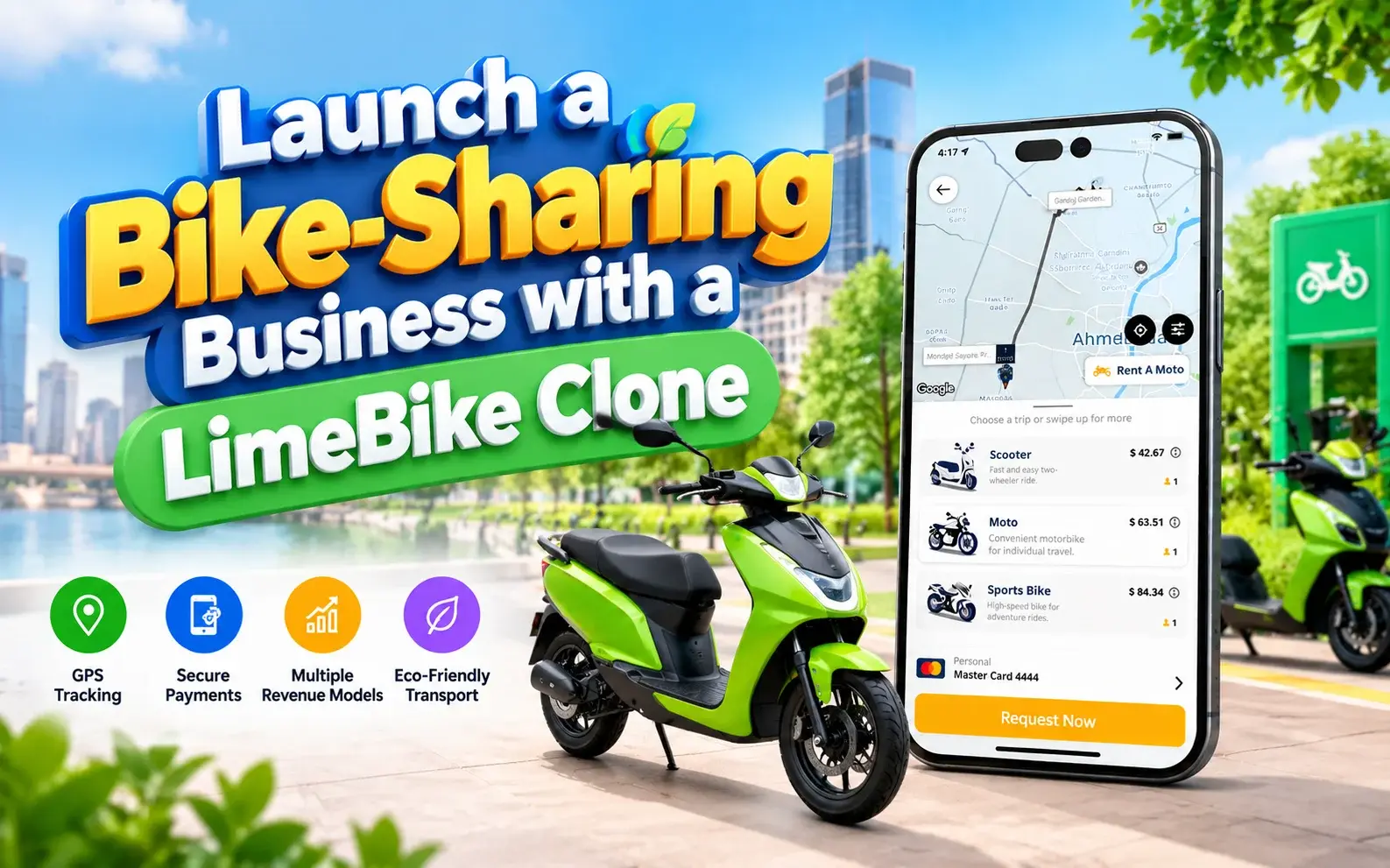
A LimeBike Clone is the best approach to starting a bike-sharing platform that allows customers to locate nearby bikes; the app will assist in unlocking them and paying for their rides via digital payment.
This business model works perfectly well in cities with high traffic, universities, tourist spots, and short-distance transport needs.
Starting a bike-sharing service is not all about putting bikes on the street, as this includes making the right business choice, picking the right technology model, and properly running the operations in order to make sure that the customers will be satisfied.
Understand the Bike-Sharing Business Model
It is essential, before investing in bikes or software, to know how the service will be operated. The business model will determine the price to be charged, fleet size needed, and maintenance required, along with the technology to operate on a daily basis.
Common models include:
- Dockless sharing: Bikes may be parked in locations that have been approved and which lie within a particular service area.
- Dock-based sharing: Customers pick up bikes at pre-established points and return them at the same location.
- Electric bike sharing: E-bikes have motor assistance for long distance trips and routes with slopes during the ride.
- Campus or community sharing: Cycling caters to a particular demographic such as students, workers, or local inhabitants.
The optimum model is determined by the travel habits of the local community as well as its riding policies, infrastructure, and demand from the riders. One possible approach is to limit services to a smaller area in order to accurately measure demand before expanding operations to additional localities.
Choose the Right LimeBike Clone App Solution
Developing a bike-sharing platform from the ground up can involve huge amounts of time, technical expertise, and continuous financing. A LimeBike Clone app provides the starting framework for entrepreneurs planning to enter a similar service under their own brand, without developing the core of the system themselves.
The ready-made platform can have booking services, bike geolocation features, payment integration, and an admin interface. Then business can align the software according to their pricing policy, service area, branding, and other requirements based on operations.
Before making a selection of a provider, businesses should check for essential integrations being available, source code and licensing agreements, scalability, support provisions, as well as the total expense of customization. It is necessary to demonstrate the actual product to understand how the system actually operates in practice.
Essential Bike Rental App Features
The appropriate bike rental app features enable riders to access bikes easily whilst providing operators with effective means of managing their fleet.
Live bike location
With the help of an interactive map display, riders can conveniently view the number of bikes and their nearest locations within the rental range.
QR code unlocking
QR scanning technology combined with compatible smart locks makes using bikes easier and eliminates requiring manual handovers.
Digital payments and fare calculation
Riders can check fees and make payments using the available payment methods, while the platform calculates fees based on the selected pricing rules.
Fleet and maintenance management
Managers can monitor bike status, find maintenance requirements, and manage service zones, as well as check usage information.
Extra capabilities to be included: ride history, service or promotional offers, customer service, notifications, and reporting. The final feature list should match the business model and not be packed with unnecessary functional modules at launch.
Develop a Practical Pricing Strategy
The pricing strategy has an impact on both rider adoption and the sustainability of the business. The bike-sharing platform may combine different revenue models as per the demand of the locality.
- Pay-per-minute or per-ride: These payment systems work by charging riders based on their level of usage.
- Daily and monthly passes: It encourage riders to make multiple bookings.
- Membership plans: Membership services offer many types of discounts or advantageous conditions for committed riders.
- Business partnerships: Business partners allow bikes to be accessed at hotels, universities, residential buildings, or business premises.
It is important for pricing to incorporate maintenance costs, repair expenses, costs related to payment processing, workforce and bicycle reallocation. Discounts may help attract first riders but must be compensated for by an appropriate pricing strategy.
Launch in One Area and Expand Gradually
A pilot launch allows testing of the service before investing in a large fleet. Find a small area with steady demand from riders, available parking arrangements, and reasonable access to common destinations.
Record metrics like bike usage, average trip length or duration, repeat bookings, the frequency of repairs, complaints from riders, and the total amount obtained per bike. This will help establish how successfully bikes are positioned and whether prices need to be adjusted or not.
Marketing can be initiated by forming partnerships within the local community, developing referral programs, using social networks, and launched promotions. When the service’s bugs are ironed out and demand becomes predictable, it is possible to extend the operations to additional zones.
How V3Cube Can Support a Bike-Sharing Launch
V3Cube offers clone-app development solutions designed to give businesses a starting technology foundation for launching branded digital services. Implementing a suitable customizable solution for the bike-sharing business can eliminate the need to develop each software functionality independently.
When using LimeBike Clone script, businesses get the initial platform for the customer-facing application and administrative functions, depending on the scope of the confirmed project. This allows businesses to focus on entering the market, operating fleets, and acquiring riders while customizing the platform according to their requirements.
Potential advantages of working with V3Cube include:
- A pre-built foundation: Could lessen development efforts about developing a complete platform from scratch.
- Brand customization: Enables creating a business identity through suitable branding and interface functions provided in the chosen package.
- Feature planning: Helps structure the required app components around the intended service model.
- Expansion planning: A suitable solution can be evaluated for additional service zones, more bikes, and future operational requirements.
However, the point is not only having clone software at hand, but the ability to adapt the clone solution to the business needs.
In this regard, it is essential to check which bike-sharing-specific capabilities are available, particularly whether smart lock connection, GPS tracking, billing, and fleet management options can be integrated or are supported.
Conclusion
To initiate a bike-sharing venture, out of many factors, businesses need to have a clear operating model, a realistic financial plan, reliable bike models, and a software solution for rental operations and fleet management. Running a focused pilot will give an opportunity to validate the market demand before expanding the service.
Using the services of V3Cube can be a good idea in cases where businesses need to have a branded bike-sharing platform, since the business requirements match their pre-built foundation.
A thorough analysis of hardware compatibility, customization options, pricing, and technical support can help to launch a solid foundation and long-term growth for the business.
FAQs
What is a LimeBike-style app?
This mobile platform is designed to enable riders to discover, unlock, rent and make payments for shared bikes digitally. However, the specific functions of this business model depend on operational strategy and the multiple ride hardware that are connected.
How much does it cost to launch a bike-sharing service?
Investment is augmented by the size of the fleet, type of bike and smart-lock technology, software, maintenance needed and local operating regulations. Making a pilot launch allows controlling the initial spending.
Can a bike-sharing app support electric bikes?
Yes, as long as the chosen platform and hardware integrations allow the use of e-bikes. Other factors to be taken into account are issues related to battery level and charging, as well as maintenance tracking.
Why use a ready-made app solution instead of building from scratch?
A ready-made solution can provide a pre-built software base and result in a decrease in the development process. However, the efficiency of using this option will depend on the available features of the product, its integration possibilities, and customization.
How Can a Bike-Sharing App Generate Revenue?
Revenue can be obtained through per-ride payments, hourly pricing, memberships, passes, and partnerships with other businesses. The level of profit depends on the demand and the operating costs incurred.